Aiken Land Conservancy

Aiken Land Conservancy (ALC), an accredited land trust based in Aiken, South Carolina, is proud to partner with the Burning for Birds Conservation Collaborative to implement land management that will benefit declining bird species. The mission of the Aiken Land Conservancy is to preserve Aiken’s unique character and natural and historic resources for present and future generations through advocacy and land protection.
About this Partner Project
Aiken Land Conservancy (ALC) currently holds over 5,000 acres in conservation easements and owns just over 500 acres. Although many of these conservation easements and fee-owned lands sit within the broader, fire-adapted longleaf pine ecosystem, many of these lands have not received prescribed fire in many years, if ever. Consequently, populations of fire-adapted bird species have likely declined on these lands over time.
Phase 4 Project Activities (2026-2027)
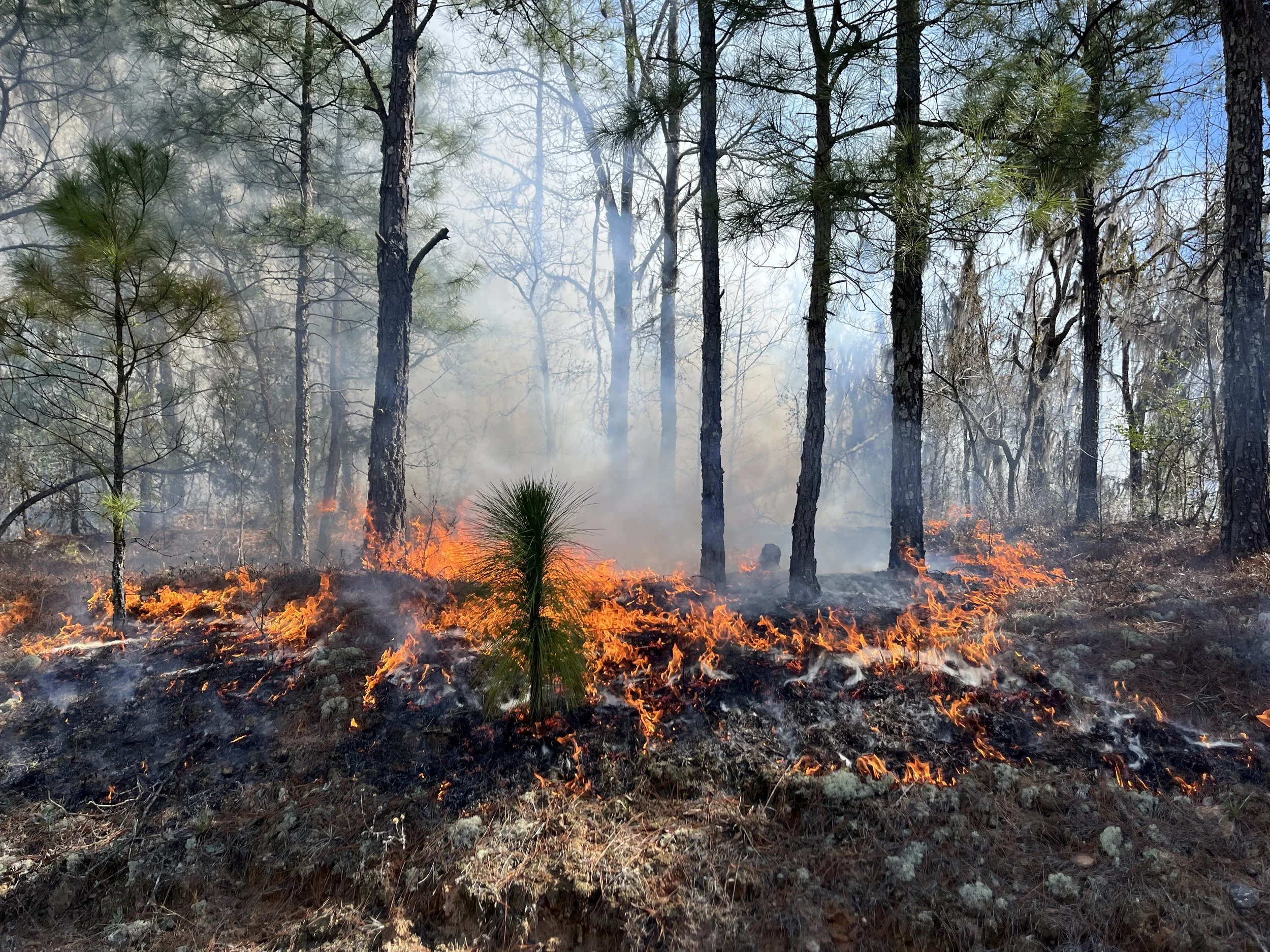
ALC will use Burning for Birds Conservation Collaborative Funds to support the installation of firebreaks and implementation of prescribed fire on conservation properties in Aiken and Barnwell County. Importantly, funds will also be utilized to coordinate the many moving parts inherent to planning and conducting safe prescribed burns. Funds will support at least 90 acres of prescribed burning, including a reintroduction burn in Barnwell State Park in partnership with South Carolina State Parks, Quail Forever, and The Longleaf Alliance. A post-burn bird survey, using eBird and playback surveys, at the park will also be an outreach opportunity for members of the public to become familiar with the benefits of prescribed burning. Three landowners, at least, will be engaged through this work and at least 10 State Wildlife Action Plan-listed bird species will be documented during this project.
Phase 3 Project Activities (2024-2025)
Specifically, Aiken Land Conservancy will apply prescribed fire on lands of interested conservation easement landowners for the first time, as well as on its own lands where appropriate and practical. Implementing this burning will require several steps, including the creation of fire breaks around the burn units and the engagement of a contractor who has the equipment and expertise to successfully complete the burns. Prescribed burn volunteers will assist with burning when possible. One of the burns will be part of a “Learn N’ Burn” event that teaches interested landowners about the intricacies of burning their land and lets them experience a prescribed burn firsthand. This event will be held in partnership with The Longleaf Alliance, and possibly other local partner organizations. A special emphasis during this outreach will be the seasonality of burning, and how growing season burns can benefit fire-adapted bird species.
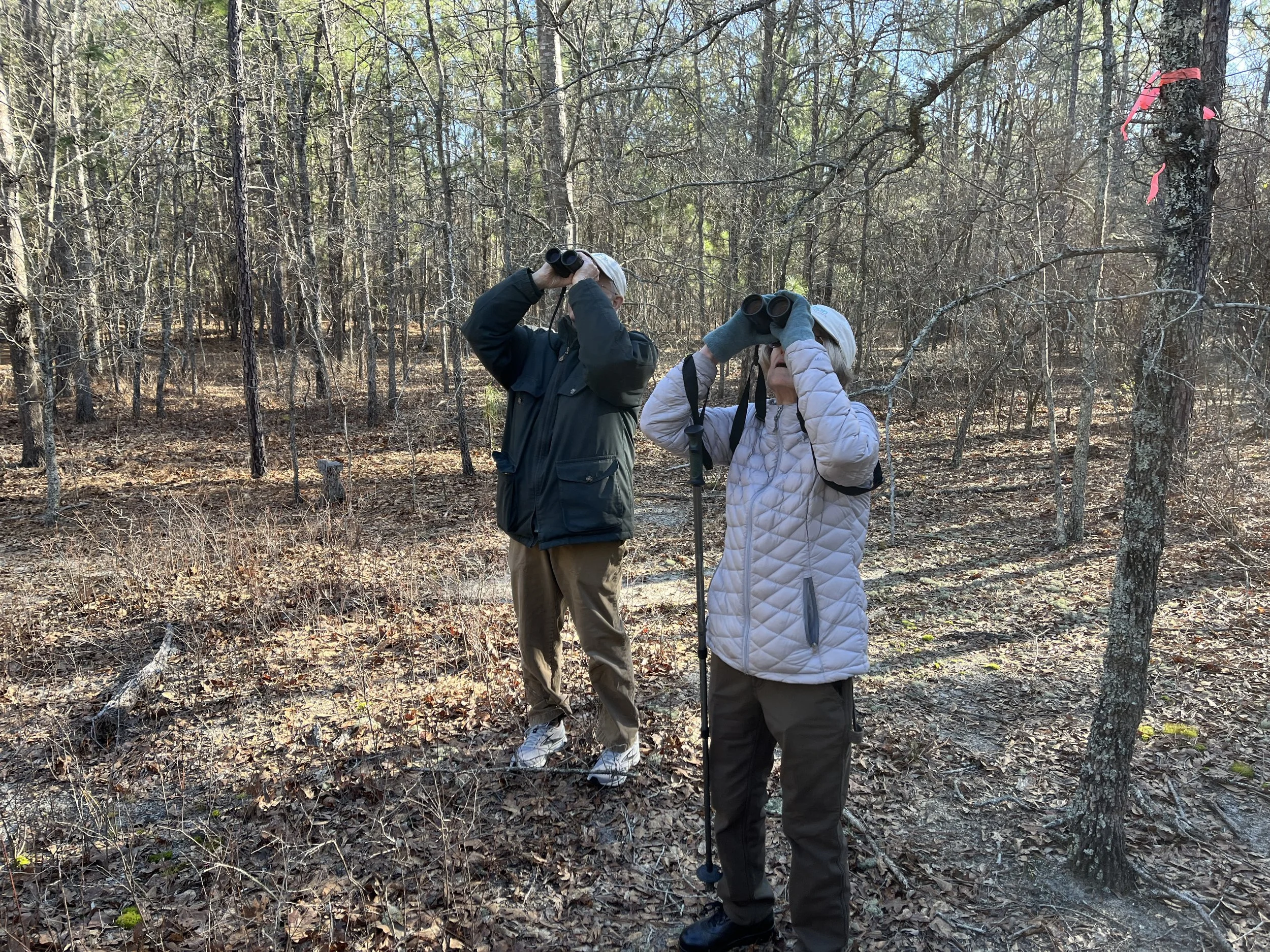
Aiken Land Conservancy will partner with the Augusta-Aiken Audubon Society to conduct pre and post-burn surveys of fire-adapted bird species using an epi-collect phone app coupled with eBird. The focal species will be Northern bobwhite, Eastern towhee, and brown-headed nuthatch, all of which have declined due to a lack of fire in their habitats. Data will be developed to gather a baseline on each site prior to a late winter/early spring burn, and then will be collected again during the next breeding season. Binoculars will be provided to participating landowners for their willingness to facilitate Audubon access to their property as well as to equip them with the tools needed to document, via eBird, the birds on their property going forward.
This funding provides Aiken Land Conservancy with the ability to apply needed management to key conservation properties, fill distribution gaps of declining bird species on infrequently-birded properties, document the response of these declining species to active management, engage the local community around bird conservation and prescribed fire, and increase the number of partners in the Burning for Birds Conservation Collaborative. Aiken Land Conservancy appreciates both the partnership with the other four land trusts that make up this Conservation Collaborative, and the support of the Cornell Land Trust Bird Conservation Initiative for making this work possible.

Project Updates